
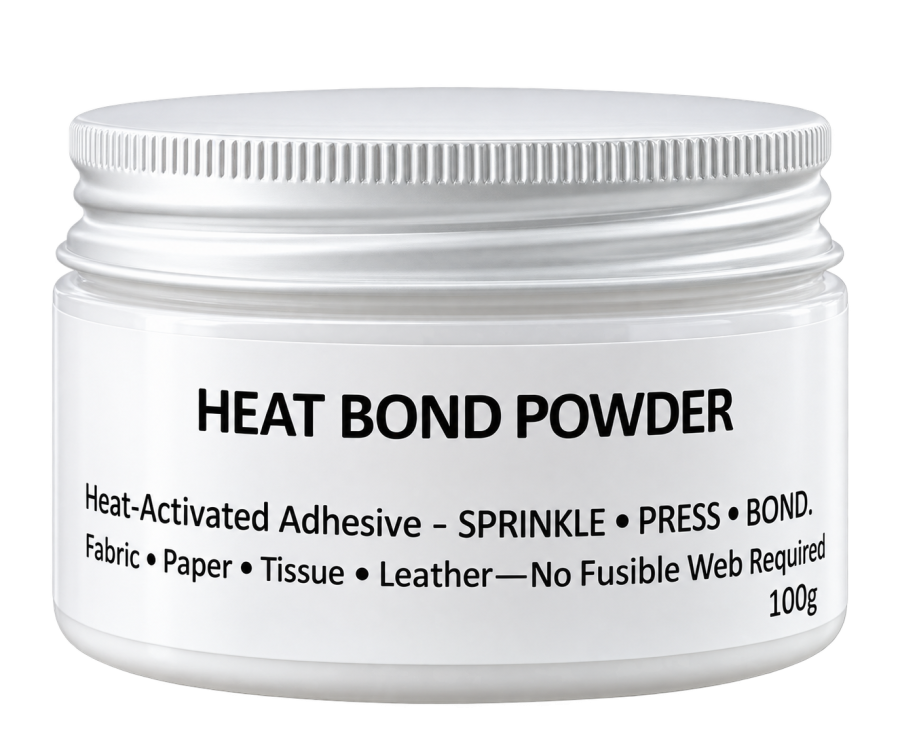
Heat Bond Powder
R119.00
Heat-Activated Adhesive
- SPRINKLE • PRESS • BOND
- For: Fabric • Paper • Tissue • Leather
- No Fusible Web Required
- Strong • Thin • Flexible
100 g
A fine heat-activated adhesive powder for creating a strong, flexible bond without bulky fusible web or liquid glue.
Suitable for fabric to fabric, fabric to paper, fabric to tissue paper and leather, subject to material heat tolerance.
DIRECTIONS
- Sprinkle a very light, even layer over the surface. Less is more.
- Position the material to be bonded on top.
- Set iron to COTTON / HIGH heat with STEAM OFF.
- Press firmly for approximately 1 minute, applying steady pressure.
- Gently lift/test an edge. If the bond is not secure, press again until fully bonded.
- Allow to cool.
IMPORTANT
Always test on a scrap piece first. Cotton/high heat is our recommended setting for heat-resistant materials. Reduce the temperature for polyester, synthetics, coated materials, delicate fabrics or heat-sensitive leather according to the material manufacturer’s care instructions.
Do not use steam. Do not over-apply. A light sprinkling is all that is required.
STORAGE & SAFETY
Keep tightly closed and dry. Avoid breathing airborne powder and avoid contact with eyes. Keep out of reach of children. Use with adequate ventilation.
Heat Bond Powder – Create Your Own Fusible Fabric, Book Cloth & More
Heat Bond Powder is a fine, heat-activated adhesive powder that allows you to permanently bond compatible materials together using heat and pressure — without liquid glue and without traditional fusible web.
Simply sprinkle a very light layer between the two materials, position them together and press with a household iron. When heated, the fine adhesive particles melt to create a thin bond between the layers.
Because only a light sprinkling is required, the finished material remains soft and flexible, without the bulky feel that can come from some sheets of fusible web or heavy layers of liquid adhesive.
It is particularly useful for bookbinding, fabric crafts, sewing, collage, mixed-media work and projects where you want to laminate fabric to another material while keeping the finished piece thin and flexible.
Make Your Own Book Cloth
One of our favourite uses for Heat Bond Powder is making your own book cloth from ordinary fabric.
Traditional book cloth usually has a paper backing that stabilises the fabric, helps prevent adhesive from penetrating through the weave and makes the cloth easier to cut, handle and apply to book board.
With Heat Bond Powder, you can create your own paper-backed book cloth from fabrics you already have.
Choose your cotton or other suitable fabric and a lightweight paper or tissue paper for the backing.
Lay the fabric with the reverse side facing upwards and sprinkle a very light, even coating of Heat Bond Powder over the surface. You do not need to completely cover the fabric in a thick white layer — a fine sprinkling is sufficient.
Place your paper or tissue paper over the powder and smooth it carefully into position.
Set your household iron to the Cotton / High setting with the steam switched OFF.
Press firmly with the iron for approximately 1 minute, using steady pressure. Rather than simply gliding the iron quickly over the surface as you would when ironing clothing, give the adhesive time to melt and bond the two layers.
Gently test an edge. If the paper and fabric separate easily, apply additional heat and pressure and test again.
Once bonded, allow the material to cool.
You now have a piece of paper-backed fabric ready to be cut and used as book cloth for journals, notebooks, albums, boxes and other bookbinding projects.
Bond Fabric to Fabric
Heat Bond Powder can also be used to fuse two layers of fabric together.
This is useful when you want to add a backing fabric, strengthen a lightweight material, combine decorative fabrics or create a laminated fabric without inserting a sheet of fusible web.
Sprinkle a very light layer between the fabrics, position the second layer, and press using a dry iron.
Because the adhesive begins as a fine powder rather than a continuous sheet, only a small amount is needed to produce a bond. This helps the finished fabric retain its natural flexibility.
Fabric to Paper & Tissue Paper
The fine powder makes Heat Bond particularly useful when working with lightweight papers.
It can be used to bond fabric to paper or tissue paper without brushing wet adhesive over the surface.
This can be especially helpful with book cloth because liquid adhesive can sometimes soak through an open fabric weave, leave visible marks or introduce moisture that causes paper to distort.
Heat Bond Powder is applied dry and activated only when heat is applied.
Fabric & Leather Crafting
Heat Bond Powder can also be useful for suitable leather and other heat-tolerant materials, opening up possibilities for decorative panels, journals, covers, mixed-media pieces and other craft projects.
Always remember that the adhesive may tolerate a temperature that the material itself does not. Genuine leather, synthetic leather, polyester, coated papers and synthetic fabrics can all respond differently to high temperatures.
For these materials, always test a small off-cut first and reduce the iron temperature where necessary.
How Much Powder Do I Need?
Very little.
Heat Bond Powder should not be applied like flour covering a work surface. You are aiming for a light, even sprinkling of particles between the two materials.
Applying more powder does not necessarily create a better result. Too much adhesive can make the finished material unnecessarily stiff.
Start lightly. You can always increase the amount slightly on your next test if required.
This also means that a 100 g bottle can go a surprisingly long way, particularly when making book cloth and other thin laminated materials.
How to Use Heat Bond Powder
Make sure both surfaces are clean and dry.
Sprinkle a very light and even layer of Heat Bond Powder over one surface. Position the second material carefully over the powder.
For cotton and other materials able to tolerate high heat, set your iron to:
Cotton / High Heat
Steam OFF
Apply firm, steady pressure for approximately 1 minute.
Gently test an edge to see whether the materials have bonded securely. If they separate, press again with heat and pressure until a satisfactory bond has formed.
Allow the project to cool before further handling.
No Special Equipment Required
You don't need a heat press or specialist laminating equipment for ordinary craft use.
Heat Bond Powder can be activated with a standard household iron, making it particularly convenient for home bookbinders, sewists and crafters.
There is also no sheet of fusible web to measure and cut before every project. Sprinkle only where adhesive is required, position your materials and apply heat.
Important – Always Test First
Different fabrics, papers, leathers and synthetic materials react differently to heat.
Our Cotton/High setting is suitable for the cotton-based applications we have tested, but do not automatically use the highest iron setting on every material.
Always test Heat Bond Powder on a small scrap of your actual materials before beginning your finished project.
Use a lower temperature for heat-sensitive fabrics and materials and increase the pressing time if required.
Do not use steam.
For best results, apply the powder sparingly and evenly.
Net Weight: 100 g
Storage: Keep tightly closed and store in a cool, dry place. Protect the powder from moisture.
Safety: Avoid creating or inhaling airborne powder and avoid contact with eyes. Keep out of reach of children. Use in a well-ventilated area.
Packed by DIY Book Binding Supplies – South Africa


DIY Book Binding Supplies
Contact Us.
Email: info@diybookbindingsupplies.co.za
Address: 55 Dunville Road, Grosvenor, Bluff, Durban, South Africa, 4052
Sunday: Closed
Monday: 10:00am–17:00pm
Tuesday: 8:00am–17:00pm
Wednesday: 8:00am–17:00pm
Thursday: 8:00am–17:00pm
Friday: 8:00am–17:00pm
Saturday: Closed
“Made for bookbinders, artists, and lovers of handmade books.”